Gospel: Luke 24.13-35 The Walk to Emmaus
13 Now on that same day two of them were going to a village called Emmaus, about seven miles from Jerusalem, 14 and talking with each other about all these things that had happened.
15 While they were talking and discussing, Jesus himself came near and went with them, 16 but their eyes were kept from recognizing him. 17 And he said to them, ‘What are you discussing with each other while you walk along?’
They stood still, looking sad. 18 Then one of them, whose name was Cleopas, answered him, ‘Are you the only stranger in Jerusalem who does not know the things that have taken place there in these days?’ 19 He asked them, ‘What things?’ They replied, ‘The things about Jesus of Nazareth,[h] who was a prophet mighty in deed and word before God and all the people, 20 and how our chief priests and leaders handed him over to be condemned to death and crucified him. 21 But we had hoped that he was the one to redeem Israel. Yes, and besides all this, it is now the third day since these things took place. 22 Moreover, some women of our group astounded us. They were at the tomb early this morning, 23 and when they did not find his body there, they came back and told us that they had indeed seen a vision of angels who said that he was alive. 24 Some of those who were with us went to the tomb and found it just as the women had said; but they did not see him.’
25 Then he said to them, ‘Oh, how foolish you are, and how slow of heart to believe all that the prophets have declared! 26 Was it not necessary that the Messiah should suffer these things and then enter into his glory?’ 27 Then beginning with Moses and all the prophets, he interpreted to them the things about himself in all the scriptures.
28 As they came near the village to which they were going, he walked ahead as if he were going on. 29 But they urged him strongly, saying, ‘Stay with us, because it is almost evening and the day is now nearly over.’ So he went in to stay with them. 30 When he was at the table with them, he took bread, blessed and broke it, and gave it to them. 31 Then their eyes were opened, and they recognized him; and he vanished from their sight. 32 They said to each other, ‘Were not our hearts burning within us while he was talking to us on the road, while he was opening the scriptures to us?’ 33 That same hour they got up and returned to Jerusalem; and they found the eleven and their companions gathered together. 34 They were saying, ‘The Lord has risen indeed, and he has appeared to Simon!’ 35 Then they told what had happened on the road, and how he had been made known to them in the breaking of the bread.
.
Intro:
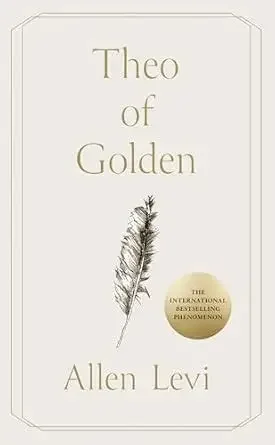
I would like to introduce you to a dear friend of mine called Theo. He may not be a real friend in flesh and blood and even in real time – but he is a true friend in the wonderful story told about him in the book: Theo of Golden by Allen Levi.
One spring morning, an old man named Theo arrives in Golden, Georgia. A small southern town. The kind with one stoplight and everybody knowing everybody else's business except when they're pretending not to. Nobody knows where he came from. Nobody knows why he's here.
He's Portuguese. In his eighties. Soft-spoken. Asks more questions than he answers. And he walks into a coffee shop named The Chalice and sees something that changes everything: ninety-two pencil portraits hanging on the walls.
Just drawings. Faces. People from Golden, sketched by a local artist called Asher who'd sat in that coffee shop for years, quietly capturing anyone who'd allow.
And Theo, for reasons he won't explain, decides to buy them. All of them. One at a time. And return each portrait to the person it depicts. Their "rightful owner," he calls it. That's the whole plot. That's it. An old man buying drawings and giving them to people.
Each portrait comes with a story. And Theo is interested in the stories; he sits down. Asks questions. Listens in a way that makes people tell him things they've never told anyone. About loss. About regret. About the person they used to be before life bent them into shapes they didn't recognize.
One woman gets her portrait and realizes she's been hiding since her husband died. Another man sees himself as he was before grief made him unrecognizable. A teenager discovers that someone saw her when she thought she was invisible.
And Theo, this mysterious old man who won't talk about himself, becomes the catalyst for Golden waking up to itself. For people remembering they're more than their routines. More than their wounds. More than the diminished versions of themselves they've been performing for years.
This is a slow book. Just an old man moving through a town, having conversations, returning portraits, being present in a way that feels almost radical in its simplicity.
This book is a slow walk and a deep talk.
This book makes us wonder: When was the last time you really saw someone? When was the las time you paid attention to someone’s story instead of waiting for your turn to talk? And harder still: When's the last time I let myself be seen? Really seen, not performing competence or hiding behind accomplishments, just... existing as I am, without armor.
This fine book articulates so gently that most of us are walking around with portraits of ourselves hanging somewhere. Drawn by someone who noticed us at a moment when we were fully present before we learned to edit and minimize and disappear. And we never got them back. We never got told this is you, as you were, as someone saw you.
Theo is a man who gives that back. One face at a time, in one small town, with no announcement and no agenda. Just attention and a quiet insistence that people are worth being seen.
WE know we live broken lives and in a broken time. But this fine book shows what becomes possible when one person decides kindness still matters. When one stranger shows up and starts returning what we've lost without even knowing we'd lost it.
That's what Theo does. And that's what this book does too.
It returns something. Some small forgotten part of yourself that's been hanging on a wall somewhere.
Theo of Golden is a fine book about walking and talking. About being seen and restored. To be met by grace.
Sermon: Walking & Talking.
At the end of the book and at the end of Theo’s life, there is a memorial in Golden. The memorial of Theo. Pastor Lundby gives one of the most beautiful memorial sermons, I have ever heard:
“We have just recently passed through the Easter season in which times of darkness and light death and resurrection, despair and hope, fear and faith, and grief and joy have all been set before us.
As I have reflected on Theo’s life these past few days, one scene from the record of Christ life has come to my mind over and over.
You probably recall the scene. It occurs on a path called the Road to Emmaus. Jesus had been executed and news of his death had been widely circulated. It is a story of great religious significance in a city of great religious importance. And all the people seemed to have been talking about it.
Two people were walking the Road to Emmaus tighter.
Were given few details about them in the text but one can imagine them robed and sandaled, leaning forward with their hands clasper behind their back, faces furrowed with concern and questions, the sorts of concerns and questions that we have whenever death comes our way, the sorts of questions we have today, this very hour, two thousand years later
Thos two – one was a man named Cleopas – were soon joined by a third.
“Mind if I join you.” he asked.
We don’t know if He was welcome Maybe the couple would rather have been left to themselves, to untie the Gordian knot of the crucifixion without the distraction of a stranger. But they tolerated him even if they didn’t actually welcome Him.
And this third, a talkative chap it seems, asked what they were discussing so intently.
“Don’t you know! Haven’t you heard! Don’t you watch the news?”
And so, they gold Him, this poor uniformed fellow. You can almost feel their impatience, their astonishment at his ignorance. Maybe he asked for details, for clarification. Maybe he expressed incredulity and amazement.
“You don’t say! Really!”
Maybe his brow was furrowed too. Maybe not. Maybe He smiled, squinted his eyes, and looked up. We don’t know.
But what we do know is that he took over the conversations, just hijacked it right out from under them. And they told them a long story, one they thought they knew already, one they thought they had already figured out and clearly understood.
He told them the story that many of us think we knew, one that we think we have figured out. The wonderful story that, for many of us, has lost any element of wonder. The text tells us that Jeus opened the scriptures and brought to life all those words about the everlasting Go, about a world made good and beautiful but now horribly ruined, about a rescue that none could possibly have imagined. He told them that story in a way that reawakened the wonder in those two travelers.
From all indications to their credit, they listened attentively and without interruption. They were so captivated that, when they faintly reach their destination, and should have been saying farewell, they asked him to stay with them longer, which he did. At some point, those tow pilgrims realized that their mysterious walking partner was no ordinary man. He could tell them the story because he wrote the story. Because he was the story.
We are told that their eyes were opened.
And this is what the pair subsequently recalled when they spoke of their seven-mile walk from Jerusalem to Emmaus.
Our hearts burned with us. Their hearts burned within them.
We all walk roads of various descriptions in life. The long and winding road. The road to ruin. Easy Street. The road less traveled.
Along the way, there are questions, there is news, there are concerns and fears and uncertainties that furrow our brows, trouble our souls, and break our hearts. Death terrifies many of us.
But God, in his sublime goodness, has always sent others, mysterious others to walk with us – prophets, preachers, friends, teachers, artist, storytellers, wives and husbands, children, songbirds and rivers, even hardship and loss – to help us see clearly. They are ones who make our hearts burn with us, who call us out of our indifference, our lethargy, our death and defeat. They call us to be fully, alive, or at least more alive than we were before we met them.
For a year, Theo was in our midst and now looking back we can say that our hearts burned within us, our souls stood on tiptoe, our eyes recognized something good and true, and our minds could believe, if not fully, then ever so slightly, that love and heaven and forgiveness are the most real thins that we can know in this world.
Theo could have come to us with great fanfare. He could have flaunted his importance and impressed us with this great wealth and long list of accomplishments. Instead, he came with anonymous handwritten letters and no last name. Instead, he came, as did His lord not to be served but to serve. And if you wonder why, if you are mystified that he was so ruthlessly good, let me tell you and you and you…... he loved you. And so I say to you, my friends and neighbors, followers of Christ and those not, if you would honor the memory of Thoe, then go good, bestow kindness, strive for beauty, seek and find the river that leads to life everlasting and draw from the fountain that never runs try.
The sermon today was a story told in a great novel. About walking and talking. Being seen and heard and loved.
Remember those conversations you had with friends, family, strangers that changed you and lead you.
Remember the prophets, preachers, friends, teachers, artist, storytellers, wives and husbands, children, songbirds and rivers, even hardship and loss –
Remember those conversations you had with God, reassuring you that you are indeed embraced by grace.
Remember how we raise each other up and how we are raised up by God. And how you found your way. Amen.